

Switching from JavaScript to Python might feel like trading in a sports car for a cozy couch, but the ride is just as thrilling. Both languages have their quirks, but diving into Python opens up a world of simplicity and elegance that even the most seasoned coder can appreciate. Imagine writing clean, readable code that doesn’t require a PhD in hieroglyphics to understand!
Overview of JavaScript to Python
Transitioning from JavaScript to Python enables programmers to leverage unique features of each language. JavaScript excels in web development, while Python shines in data analysis, machine learning, and automation. Working with Python feels intuitive due to its straightforward syntax, which emphasizes readability. Developers often appreciate how quickly they can implement algorithms and scripts in Python.
Features of Python include dynamic typing and extensive libraries, allowing for rapid development. The language supports multiple programming paradigms, such as procedural and object-oriented. This flexibility appeals to coders looking to explore different programming styles.
Comparing the performance of JavaScript and Python reveals some key differences. JavaScript runs in-browser environments, making it ideal for interactive web applications. In contrast, Python operates extensively on servers, managing backend tasks efficiently. This distinction influences project selection and technological stacks.
Developers will find that Python’s extensive community provides robust support. Many resources, including tutorials and forums, assist in solving common problems. In JavaScript, developers rely on frameworks like React or Angular for advanced features. Python features its own frameworks, such as Django and Flask, catering to web applications.
Projects transitioning from JavaScript to Python often benefit from Python’s data handling capabilities. Data manipulation libraries like Pandas enhance analytical tasks. Additionally, tools such as TensorFlow facilitate machine learning implementations, offering a wide array of functionalities.
Ultimately, migrating from JavaScript to Python opens a path to new opportunities. Each language presents unique advantages, enriching a developer’s skill set and enhancing their coding experience.
Key Differences Between JavaScript and Python
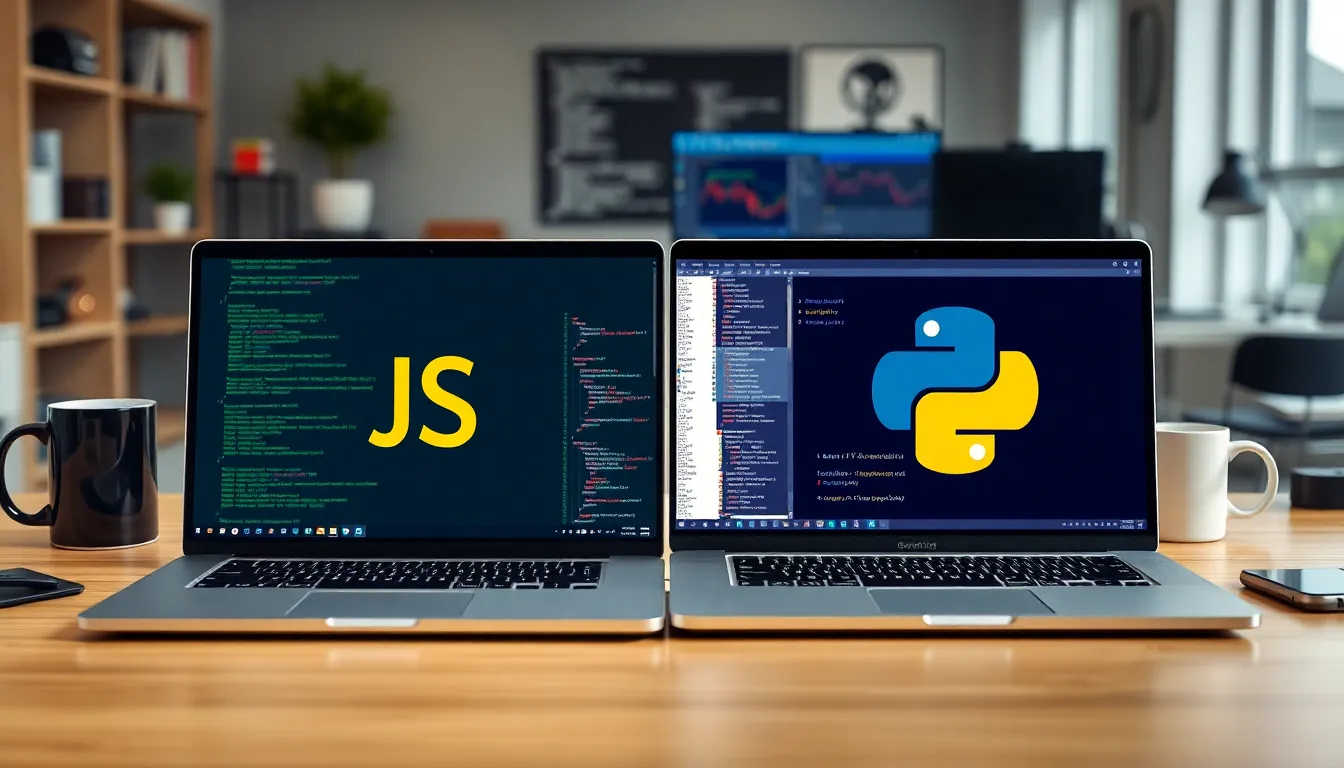
JavaScript and Python exhibit distinct differences that significantly impact their usability in various programming domains. Understanding these differences aids developers in transitioning between the two languages.
Syntax and Structure
Python emphasizes readability, using indentation to define blocks of code. JavaScript relies on curly braces to achieve the same result, which can feel more cluttered. In Python, coding resembles plain English due to its straightforward syntax. JavaScript’s syntax, while flexible, can become complex with nested structures. Overall, Python’s approach often leads to cleaner code, while JavaScript brings versatility suitable for interactive applications.
Variable Declaration
Declaring variables in JavaScript requires the usage of var, let, or const, introducing additional considerations for scope and mutability. Python simplifies this by allowing direct assignment without explicit keywords. Python’s dynamic typing facilitates easier variable manipulation, while JavaScript’s strict rules can prevent unintended behavior. Swift changes in data types occur more naturally in Python, making it an attractive choice for rapid prototyping.
Control Structures
Control structures in Python and JavaScript present notable distinctions. Python uses straightforward keywords like if, elif, and else for conditional statements, fostering better clarity. In contrast, JavaScript employs similar keywords, but its syntax can become cumbersome with extensive use of nested conditions. Both languages offer for and while loops, yet Python’s simplicity makes them easier to use. Mastery of these structures enhances overall programming efficiency, regardless of language.
Use Cases for JavaScript to Python
Transitioning from JavaScript to Python offers various opportunities across different domains. Developers can utilize Python’s strengths in several prominent areas.
Web Development
Web development often requires robust backend support, where Python excels. Frameworks like Django and Flask streamline web application creation, enabling rapid development and deployment. Python’s simplicity fosters clean, maintainable code that’s easier for teams to collaborate on. Additionally, integrating with JavaScript frontends remains seamless, allowing for dynamic and responsive user experiences. Many developers appreciate the ease with which they can switch from JavaScript-centric projects to Python-based implementations, leveraging its extensive libraries for better functionality.
Data Science and Machine Learning
Data science and machine learning thrive in the Python ecosystem. Libraries such as Pandas and NumPy facilitate efficient data manipulation and analysis, essential for extensive datasets. Machine learning frameworks like TensorFlow and scikit-learn empower developers to build and deploy intelligent applications swiftly. Python’s intuitive syntax eliminates barriers to entry, enabling both beginners and experienced programmers to carry out complex analyses. The active community support often results in a wealth of resources, driving innovation in data-centric projects across various industries.
Tools for Converting JavaScript to Python
Multiple tools facilitate the conversion from JavaScript to Python. Each tool has distinct advantages that cater to different needs.
Libraries and Frameworks
Python offers several libraries and frameworks that simplify the transition. Frameworks like Django and Flask support backend development while seamlessly integrating with JavaScript frontends. Libraries such as Pandas enhance data manipulation, making it easier to manage datasets. Transitioning projects often leverage these tools to maintain performance and functionality. Adopting these resources allows developers to harness Python’s capabilities effectively.
Online Translators
Online translators serve as another valuable resource for converting JavaScript code to Python. Tools like Transcrypt and JS2Py help automate the conversion process, allowing developers to compile JavaScript directly into Python code. Utilizing these online options can significantly reduce manual effort and time. Each platform provides documentation and examples to assist with the conversion process, ensuring users achieve desired outcomes. These translators offer a practical solution for those familiar with one language transitioning to the other.
Transitioning from JavaScript to Python can be a rewarding journey for developers. Embracing Python’s simplicity and readability not only enhances coding efficiency but also broadens opportunities in various fields like data science and machine learning. The ability to leverage powerful libraries and frameworks makes Python a strong choice for backend development.
With tools available to ease the conversion process, developers can navigate this transition with confidence. This shift not only diversifies their skill set but also enriches their overall coding experience. Adopting Python can lead to exciting new projects and innovative solutions, making it a valuable addition to any developer’s toolkit.